Walk into a flooring showroom and everything looks good. The samples are clean, they're lit from above, and none of them have been walked on. That's the problem with picking flooring off a display board.
Hardwood, laminate and vinyl all have a place in a New Jersey home. They just don't have the same place. The right choice depends less on which one you like in the store and more on which room it's going into.
A floor that's perfect in a living room can be a mistake in a basement. A floor that handles a mudroom can look out of place in a dining room.
This article breaks down what each one does well, where each one fails, and the questions that actually decide it. Not which is best, because there isn't one. Which is right for the room you're standing in.
Hardwood, the One You Refinish Instead of Replace
Solid hardwood is the only one of the three you can sand and refinish. That's the whole argument for it. A hardwood floor that looks tired in fifteen years gets sanded and finished again. A laminate floor that looks tired gets thrown away.
It's also the one that moves with humidity. New Jersey summers are humid and winters are dry, and wood expands and contracts with that. That's why expansion gaps at the walls matter, and why solid hardwood in a basement is a bad idea.
Engineered hardwood handles moisture better because of how it's layered. It can usually be refinished once or twice instead of several times.
Where it belongs: living rooms, dining rooms, bedrooms and hallways. Anywhere above grade that stays reasonably dry.
Laminate, Looks Close and Hates Water
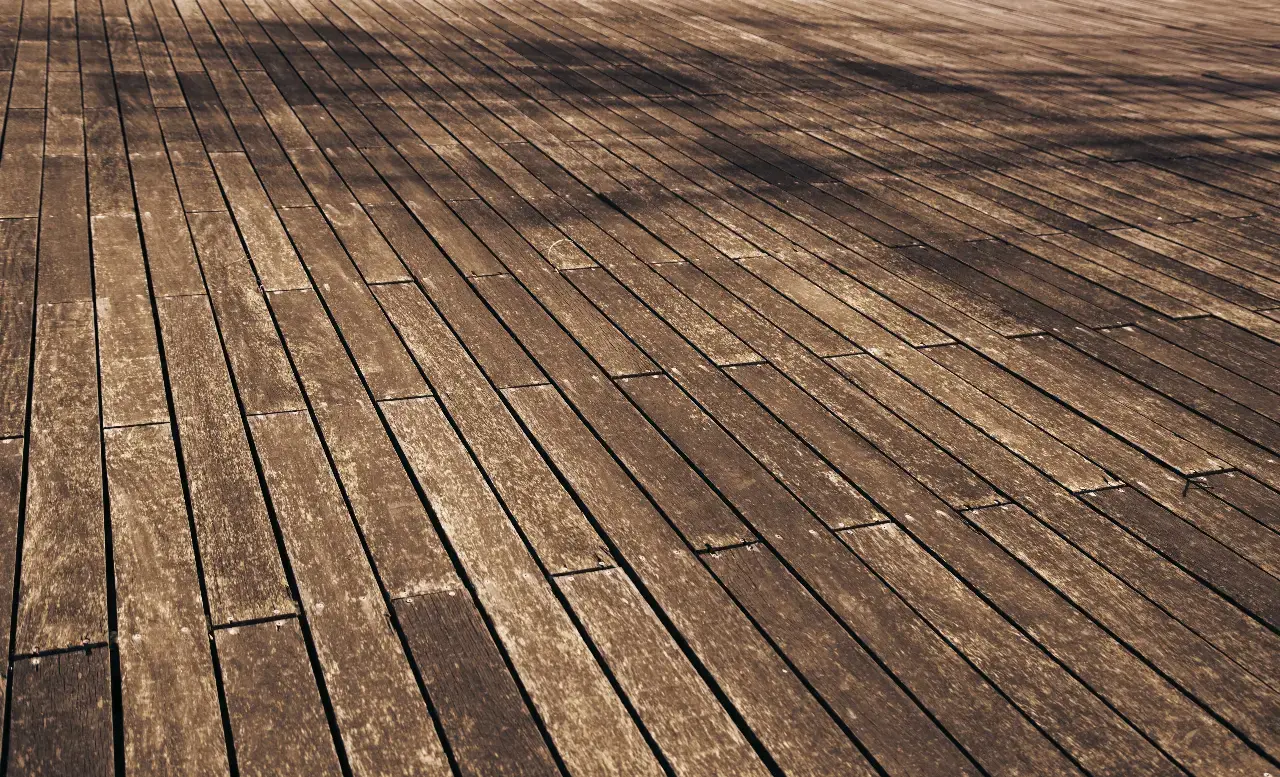
Laminate has come a long way. The printed layer on good laminate is convincing, and the wear layer holds up to dogs and kids better than a soft wood like pine.
The catch is the core. Most laminate has a fiberboard core, and fiberboard swells when it gets wet. A spill you wipe up is fine. A dishwasher that leaks overnight is not. The swelling is permanent and you can't sand it out.
Laminate also clicks together and floats over the subfloor instead of being fastened down. That makes it faster to install, but the subfloor has to be flat. Dips telegraph straight through and the joints start to separate.
Where it belongs: bedrooms, living areas, anywhere that stays dry and gets real traffic.
Vinyl, the One That Belongs in Bathrooms and Basements
Luxury vinyl plank is the answer to the water problem. The core is plastic, so standing water doesn't swell it or delaminate it. That's why it ends up in bathrooms, kitchens, laundry rooms and basements.
It's softer underfoot than hardwood or laminate, which some people like and some don't. It's also more forgiving of a subfloor that isn't perfectly flat, though flat is still better.
The trade-off is that it looks like what it is under close inspection, and it can't be refinished. When it wears out, it comes up.
Thicker planks with a solid core feel more like a real floor and less like a mat. That's usually where the price difference goes.

What Actually Decides It, the Room and Not the Sample
Four questions settle most flooring decisions, and none of them are about how the sample looks.
Is the room below grade? If yes, that rules out solid hardwood and usually rules out laminate.
Does water end up on this floor? Bathrooms, kitchens, laundry rooms and entryways all say yes. Vinyl handles it.
How long do you plan to stay? If it's a long time, the ability to refinish hardwood starts to matter.
Is the subfloor flat? Floating floors need it more than fastened floors. A subfloor that dips gets leveled first, whichever product goes on top. Answer those four and the choice usually makes itself.